Join Our Wellness Community

Get weekly natural living tips, mindfulness exercises, and exclusive content straight to your inbox.


🔒 We respect your privacy. Unsubscribe at any time.

Healthy Skin, Simplified: The Complete, Evidence-Backed Habit Guide

A practical routine you can keep for years—no 12-step extremes, just habits that actually change skin.

At a glance: barrier-first cleansing and moisturizing, daily SPF 30+, smart actives (vitamin C + retinoid), steady sleep, colorful nutrition, and stress control.

  • Barrier-friendly
  • Derm-style basics
  • Nutrition + sleep
  • SPF daily
  • Habit over hacks

Great skin isn’t luck—it’s a system. This guide expands each step with why it works, how to do it, and what to expect over 1–12 weeks. Start with the “Core 4” (cleanse, moisturize, SPF, sleep). Then layer targeted actives and supportive habits so your routine stays simple—and sustainable.

Quick win: Wear broad-spectrum SPF 30+ every morning, cleanse gently at night, moisturize while skin is slightly damp, and aim for 7–9 hours of sleep.
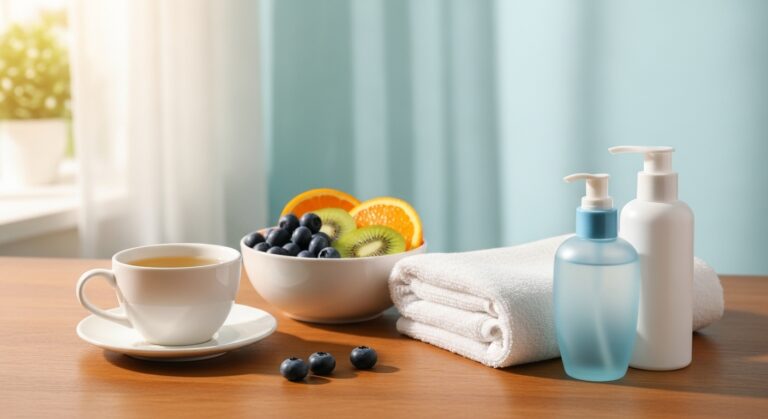
Note: This article focuses on natural, evidence-based skincare habits. It does not replace professional medical advice or dermatological evaluation.

The 12 Habits That Actually Change Skin

1) Gentle, pH-balanced cleansing (AM/PM)

Harsh surfactants raise skin pH and strip lipids, weakening the barrier. Use a mild gel/cream around pH ~5.5. Massage 30–60 seconds; double cleanse only for heavy SPF/makeup.

Metric: no tightness after rinsing; skin feels clean yet comfortable.

2) Moisturize to seal the barrier

Combine humectants (glycerin), emollients (squalane), and occlusives (ceramides) to reduce transepidermal water loss (TEWL). Apply within 1–2 minutes post-cleanse.

Metric: flakes and redness decrease within 7–14 days.

3) Daily SPF 30+ (rain or shine)

UV is the #1 extrinsic aging driver. Use 2–3 fingers for face/neck; reapply every 2 hours outdoors or after sweating/swimming. Mineral = gentler; chemical = lighter feel.

Metric: fewer new spots; better tone over 8–12 weeks.

4) Smart actives: Vitamin C (AM)

L-ascorbic acid or stable derivatives support brightness and environmental defense. Start 2–3×/week; if stingy, buffer with moisturizer or try derivatives (SAP, MAP, 3-O-ethyl).

Metric: glow improves ~2–4 weeks; dark spots soften 8–12+ weeks.

5) Smart actives: Retinoid (PM)

Retinol/retinal/ada… improve texture, pores, and fine lines. Begin pea-size for full face, 2×/week; increase slowly. Sandwich with moisturizer if sensitive.

Metric: texture smooths by 6–12 weeks; continue long term.

6) Exfoliate, don’t obliterate

1–3×/week AHA/BHA is enough for most. Signs of overdoing it: sting, tightness, shiny thin look. If irritated, stop acids and focus on barrier repair 7–10 days.

7) Sleep is topical (from the inside)

Deep sleep syncs repair pathways. Prioritize regular bedtime, cool/dark room, and caffeine cutoffs. Night-shift? Lean harder on SPF and antioxidants.

8) Eat the rainbow + protein

Plants deliver antioxidants (vitamin C/E, polyphenols); protein supports collagen. Aim for colorful produce each meal + 20–30g protein portions across the day.

🌿 Neotonics™ — Skin Health from the Inside Out

A probiotic formula that supports gut balance and cell renewal to improve skin texture, elasticity, and natural glow — starting from within.

Explore Neotonics

*Affiliate disclosure: Commissions may be earned at no extra cost to you.

9) Hydration rhythm

Steady fluids beat sudden chugs. Pair water with mineral-rich foods (fruit/veg, legumes). Very dry air? Use a humidifier at night (40–50% RH).

10) Stress tools you’ll actually use

Daily 5–10 minutes of walking, breath work, or journaling lowers cortisol spikes that fuel breakouts and redness. Tiny habits > heroic bursts.

11) Consistency > novelty

Patch-test, introduce one active at a time, and give 8–12 weeks before judging. Keep a simple log with dates and product changes.

12) Environment matters

Sun exposure, pollution, dry indoor air, and hot showers all chip away at the barrier. Wear hats/sunglasses, shorten hot showers, and moisturize right after.

Your Minimal Routine (Buildable)

Morning (daily)

  • Gentle cleanser
  • Vitamin C serum (optional if sensitive)
  • Light moisturizer (gel/cream)
  • SPF 30+ (reapply if outdoors)

Night (daily)

  • Cleanser
  • Retinoid (start 2×/week, then build)
  • Barrier moisturizer with ceramides

Weekly add-ons

  • 1–3×: AHA/BHA (on a non-retinoid night)
  • 1×: Hydrating mask if tight/dull
  • As needed: Spot treatment (benzoyl peroxide/sulfur)
Order matters: cleanse → watery serums → creamy serums → moisturizer → SPF (AM only).

7-Day Glow Checklist

DayMorningNightNotes
MonCleanser, Vitamin C, Moisturizer, SPFCleanser, Retinoid, Ceramide creamStart retinoid low & slow
TueCleanser, Moisturizer, SPFCleanser, Hydrating maskFocus on barrier
WedCleanser, Vitamin C, SPFCleanser, AHA/BHA, MoisturizerSkip retinoid tonight
ThuCleanser, Moisturizer, SPFCleanser, Retinoid, MoisturizerThin layer, pea size
FriCleanser, Vitamin C, SPFCleanser, MoisturizerEarly night & water
SatCleanser, Moisturizer, SPFCleanser, AHA/BHA (optional), MoisturizerListen to skin
SunCleanser, Vitamin C, SPFCleanser, Ceramide creamSkin check & log

Adjustments by Skin Type

Oily / acne-prone

Gel cleansers, oil-free moisturizers, niacinamide 2–5% for sebum, BHA 1–2% 2×/week. Introduce benzoyl peroxide spots carefully.

Dry / sensitive

Cream cleansers, ceramides, glycerin, squalane. Retinoid “sandwich”, skip acids during flare-ups, humidifier at 40–50% RH.

Combination

Zone-treat: lightweight gel for T-zone, richer cream for cheeks. Alternate AHA and retinoid on different nights.

Hyperpigmentation

SPF is non-negotiable. Pair Vitamin C with niacinamide/alpha-arbutin; consider azelaic acid 10% at night on non-retinoid days.

Derm-Loved Actives (Cheat-Sheet)

Vitamin C

Brightens, supports antioxidant defense; best in AM. Sensitive? Try gentler derivatives or lower strengths.

Retinoids

Gold standard for texture, pores, lines. Results come with consistency (8–12+ weeks).

Niacinamide

Balances oil, reduces redness/pores look; friendly for most skin types at 2–5%.

Azelaic acid

Great for redness, pigmentation, and breakouts; gentle entry-level active.

AHA/BHA

AHA for glow and tone; BHA for oily, clogged areas. Keep 1–3×/week.

Common Mistakes to Avoid

  • Switching too many products at once (you can’t isolate what worked).
  • Over-exfoliating to “speed things up”. It backfires with irritation.
  • Skipping SPF while treating pigmentation—progress won’t last.
  • Assuming more actives = better. Master fundamentals first.
  • Judging results in 7 days. Many changes need 8–12+ weeks.

Skin-Friendly Foods (Easy Ideas)

Breakfast

Greek yogurt + berries + oats + chia; or eggs + spinach + tomatoes + olive oil.

Lunch

Salmon bowl with quinoa, kale, roasted sweet potato, lemon-tahini drizzle.

Dinner

Chicken or tofu stir-fry with colorful veg, brown rice; finish with citrus or kiwi.

Snacks & sips

Green tea, nuts/seeds, carrots + hummus, citrus wedges, plenty of water.

Rule of color: Aim for 2–3 colors per plate. More colors → broader antioxidant profile.

FAQs

How long until I see changes?

Hydration/brightness: 1–2 weeks. Texture/tone: 4–8 weeks. Fine lines and stubborn spots: 8–12+ weeks. Track with photos every 3–4 weeks.

Mineral or chemical sunscreen?

The best is the one you’ll apply enough of and reapply. Mineral can suit reactive skin; modern chemical filters feel lightweight. Broad-spectrum 30+ is essential.

Can I use Vitamin C and retinoids together?

Yes—Vitamin C in the morning, retinoid at night. Introduce slowly and moisturize well.

What if my skin gets irritated?

Pause actives, switch to a “barrier week”: gentle cleanser + ceramide moisturizer + SPF only. Reintroduce one active at a time.

Short References

  • Photoaging and UV protection—dermatology consensus.
  • Antioxidant-rich diets and skin appearance—nutrition reviews.
  • Sleep quality and skin barrier function—sleep/derm studies.

Note: This article focuses on natural, evidence-based skincare habits. It does not replace professional medical advice or dermatological evaluation.

Scientific References

1. Photoprotection and Sunscreen

  • Gruber, F., et al. (2021). Photoprotection according to skin phototype and dermatoses. PMC8252523.
  • Turner, R. & Moran, M. (2023). Sunscreens and Photoprotection. In: StatPearls Publishing. NCBI Bookshelf.
  • Agbai, O. et al. (2022). Photoprotection for skin of all color: Consensus and clinical guidance. Journal of the American Academy of Dermatology. JAAD.
  • Watson, R. et al. (2024). Skin ageing and topical rejuvenation strategies. British Journal of Dermatology. OUP.
  • Holick, M. (2022). Sunscreen photoprotection and vitamin D status: Balancing benefits and risks. British Journal of Dermatology. OUP.

2. Nutrition, Antioxidants, and Skin Aging

  • Schagen, S. et al. (2012). Discovering the link between nutrition and skin aging. Dermato-Endocrinology, 4(3), 298–307. PMC3583891.
  • Babbar, N. et al. (2024). Skin Aging and Carotenoids: A Systematic Review of Their Protective Roles. Nutrients, 17(16), 2596. MDPI.
  • Li, Y., et al. (2024). Personalized skin health management and nutrition. Frontiers in Nutrition. Frontiers.
  • De Spiegeleer, B., et al. (2020). Dietary Antioxidant Capacity and Skin Photoaging: A 15-Year Longitudinal Study. Journal of the Academy of Nutrition and Dietetics. ResearchGate.

3. Retinoids, Topical Treatments, and Active Ingredients

  • Watson, R. et al. (2024). Skin ageing and topical rejuvenation strategies. British Journal of Dermatology. OUP.
  • Alam, M. et al. (2025). Antioxidants to Defend Healthy and Youthful Skin — Current Insights. Applied Sciences, 15(5), 2571. MDPI.
  • Flament, F. et al. (2025). Efficacy of an Oral Skincare Supplement on Skin Aging: A Randomized Controlled Study. Dermatology and Therapy. SpringerLink.

4. Dermatologists’ Behavior and Clinical Recommendations

  • Rigel, D. S. et al. (2016). Dermatologists’ Perceptions, Recommendations, and Use of Sunscreen. JAMA Dermatology, 152(4), 456–458. JAMA Network.
Natural Mind Life

Simple, evidence-inspired ideas to help you live with clarity, energy, and calm — every day.

© Natural Mind Life · All rights reserved.